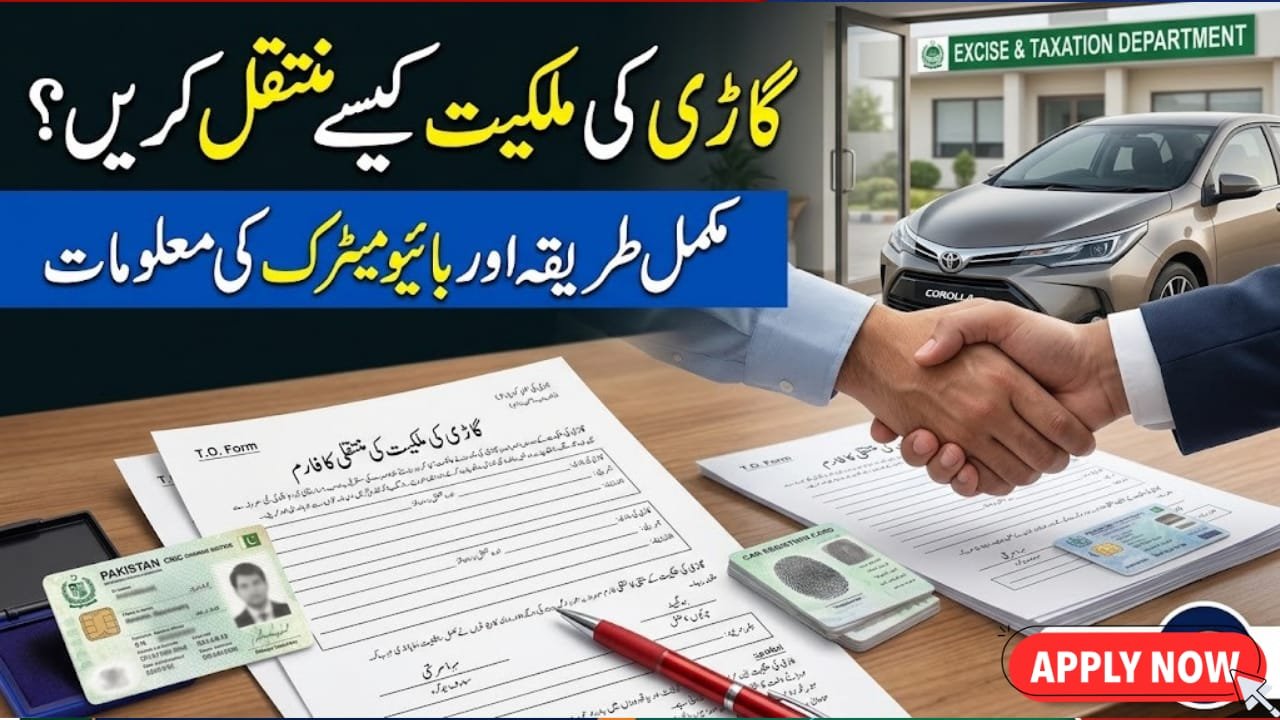
How to transfer car ownership
How to transfer car ownership is an important question for anyone buying or selling a used car in Pakistan. The process legally updates the vehicle registration record so the new owner becomes the registered owner. The procedure generally involves preparing documents, verifying the buyer and seller, paying applicable fees and taxes, and submitting the transfer application to the relevant Excise and Taxation Department. Requirements can vary by province and registration authority. This guide explains the general process, with a focus on Punjab, and highlights what you should confirm before applying.
Quick Information Table
| Detail | Information |
|---|---|
| Service | Car ownership transfer |
| Department | Provincial Excise and Taxation Department |
| Country | Pakistan |
| Eligibility | Buyer and seller of a registered vehicle |
| Main requirements | CNICs, registration documents, verification |
| Application method | Relevant online services or Excise office |
| Fee | Depends on vehicle and applicable charges |
Overview of Car Ownership Transfer
When a registered car is sold, the buyer should ensure that the registration record is transferred into their name. A sale agreement or payment receipt alone does not complete the official ownership transfer.
The relevant Excise Department checks the documents, verifies the parties as required, and updates the vehicle record after the prescribed conditions are met. In Punjab, official guidance lists transfer documents and biometric verification requirements.
Latest Updates on the Transfer Process
Vehicle transfer services and verification arrangements may change over time. Punjab provides official information about vehicle registration and post-registration transactions, including ownership transfer and biometric verification.
However, there is no single nationwide process or fee that applies to every vehicle. Before applying, check the latest instructions from the authority where your car is registered. Do not rely on an unofficial agent’s fee estimate without confirming the government charges.
Eligibility Criteria
Who Can Apply?
The buyer and seller of a registered vehicle can initiate the transfer according to the relevant department’s procedure. The buyer should ensure that the seller is the recorded owner or is legally authorized to complete the transaction.
Required Conditions
- The vehicle’s registration details should be available and verifiable.
- Applicable token tax and other outstanding dues should be addressed.
- Required identification and transfer documents must be provided.
- Biometric or other identity verification must be completed when required.
- A bank or leasing company’s NOC may be necessary if the vehicle is financed.
Benefits of Transferring Ownership
Completing the transfer protects both parties by updating the official vehicle record. It helps the buyer establish legal ownership and reduces the risk of future disputes.
It also helps ensure that official registration information reflects the current owner. Sellers should keep proof of the transaction and follow up to confirm that the transfer has been completed.
Required Documents
Prepare the following documents, subject to your registration authority’s requirements:
- Original vehicle registration certificate or smart card.
- Copy of the seller’s CNIC.
- Copy of the buyer’s CNIC.
- Prescribed transfer deed and Transfer Order (T.O.) form, where required.
- Copies of witnesses’ CNICs, if required.
- Original registration file, if applicable.
- Proof of payment of token tax and other outstanding dues.
- NOC from the bank or leasing company, if applicable.
How to Transfer Car Ownership Step by Step
Step 1: Verify the Vehicle
Check the registration number, engine number, chassis number, and recorded owner details. Resolve any discrepancies before making the final payment.
Step 2: Prepare the Documents
Collect the required CNIC copies, registration certificate, transfer forms, and any additional documents requested by the relevant Excise Department.
Step 3: Complete Biometric Verification
Follow the department’s current instructions for buyer and seller verification. In Punjab, biometric verification is part of the prescribed ownership-transfer process. Confirm the approved verification method before visiting a service centre.
Step 4: Pay the Applicable Fees
Use the official payment method provided by the relevant authority. The total amount may include transfer charges, taxes, outstanding dues, and other applicable fees.
Step 5: Submit the Application
Submit the application through an available official online service or visit the designated Excise office if physical submission is required. Keep the payment receipt and application reference.
Step 6: Confirm the Transfer
Track the application using the available official service or contact the department. Confirm that the registration record or updated registration certificate reflects the new owner’s details.
Frequently Asked Questions
1. How to transfer car ownership online?
Check whether your registration authority offers an online application or payment service. Some steps, including verification, may still require an approved in-person or biometric process.
2. Is biometric verification required?
It is required under the prescribed process in Punjab. Confirm the current rules with the authority responsible for your vehicle.
3. How much does car ownership transfer cost?
The fee depends on the registration jurisdiction, vehicle category, engine capacity, taxes, and other applicable charges.
4. Can I transfer a car without the seller?
Do not assume you can complete the transfer without the seller’s required verification or authorization. Ask the relevant Excise Department about the procedure for exceptional cases.
5. How long does the transfer take?
Processing time varies according to the authority, document verification, payment status, and any outstanding issues.
Conclusion
Completing a vehicle transfer is an essential step when buying or selling a used car in Pakistan. To understand how to transfer car ownership, first identify the Excise Department responsible for your vehicle, verify its registration details, prepare the required documents, and complete the prescribed verification and payment steps. Requirements and fees can differ across provinces, so confirm the latest official instructions before applying. Finally, keep your receipts and application reference, and check that the registration record has been updated successfully in the new owner’s name.